

Losing a tooth rarely comes with warning. Decay, an injury, gum disease, years of wear, there are plenty of ways it happens. What matters more is what you do about the gap afterward.
Most people end up choosing between a dental implant vs bridge Atlanta. Both replace the missing tooth and restore your ability to chew, but they get you there differently, with different tradeoffs years down the road.
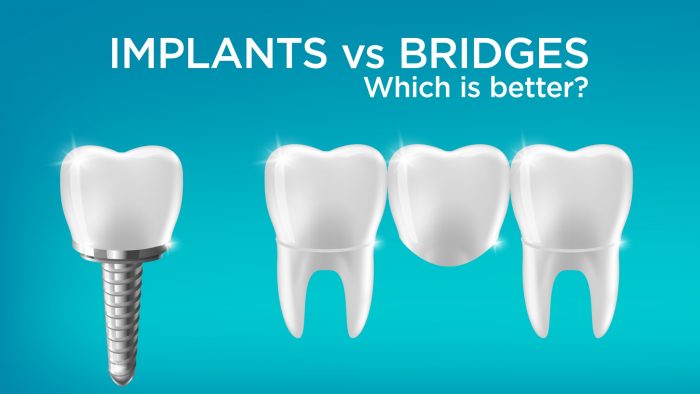
An implant rebuilds the tooth from the root up. A bridge anchors an artificial tooth to the teeth on either side of the gap. Here’s what separates the two.
What is a dental implant?
An implant replaces the missing tooth and its root, not just the visible part. It’s three pieces: a titanium post placed in the jawbone, an abutment connecting that post to the crown, and a custom crown shaped to match your other teeth.
Once the post goes in, the jawbone fuses to it over several months, a process called osseointegration, and only after that heals does the final crown get attached.
The implant doesn’t rely on the teeth next to it for support. It stands on its own, which matters most when those neighboring teeth are healthy and don’t need to change.
That’s really the biggest draw: nothing gets reshaped next door. There’s also a bone benefit. Losing a tooth usually means the bone around the old root shrinks over time, and the implant post sitting in that spot helps slow that down. With decent hygiene, an implant can stay functional for decades, even if the crown eventually needs work. A well-made crown blends in with the surrounding teeth well enough that most people forget it’s there.
None of that is free. The upfront cost runs higher than a bridge, and it’s a surgical procedure, which rules it out for some people on its own. It also takes longer, since the post needs real time to fuse with the bone. If you’ve already lost a meaningful bone in that spot, a graft might be needed first, and certain medical conditions or smoking can affect healing and candidacy.
What is a dental bridge?
A bridge takes a different approach. Instead of a new root, it uses the teeth on either side of the gap for support. The replacement tooth, called a pontic, sits where the natural one used to be. Those two neighboring teeth get reshaped so crowns can go over them, then everything is joined into one piece and cemented into place.
The appeal is speed and cost. There’s no months-long healing period, so most bridges finish in a matter of weeks, with no implant surgery and a lower upfront cost. It can also solve two problems at once if the neighboring teeth already have fillings, decay, or old crowns that need addressing anyway.
The tradeoff is permanent. Once those teeth are reshaped, that’s not reversible, and if they were healthy to begin with, some people would rather have left them alone. A bridge also doesn’t replace the root, so the bone underneath keeps shrinking regardless. Cleaning takes more effort too, since food and plaque collect under the pontic, usually calling for a floss threader or interdental brush.
Which lasts longer?
An implant that’s properly maintained can last decades, and the implant itself often stays healthy even after the crown needs replacing. A bridge usually lasts 10 to 15 years, longer with excellent care. Gum health, grinding, bite forces, smoking, and home care all affect how long either one holds up.
What does each one cost in Atlanta?
Generally, a bridge costs less upfront, but the real total depends on what your treatment requires. An implant might involve the post, abutment, crown, imaging, and possibly a bone graft. A bridge might involve preparing the supporting teeth, a temporary restoration, the permanent bridge, and eventually a replacement down the line. Insurance coverage differs too. It’s worth asking what treatment costs over the next 10 or 15 years, not just today, and your dentist can give you a real estimate once they’ve examined your mouth.
How long does treatment take?
An implant usually takes several months, since the post needs time to fuse with the bone before the crown goes on. A bone graft, if needed, extends that further. A bridge moves faster since there’s no healing period involved, typically just preparing the supporting teeth, taking impressions or scans, wearing a temporary for a bit, then fitting the permanent bridge. If speed matters to you, that’s a real advantage.
So which one fits you?
An implant tends to make sense if the neighboring teeth are healthy, you have enough bone, you want something long-term, and you’re fine with surgery and a longer wait. A bridge tends to fit better if those teeth already need crowns anyway, you want this done soon, you’d rather skip surgery, or the lower upfront cost matters more. Your dentist will also weigh your gum health, bite, hygiene habits, and any medical conditions that could affect healing.
What if you leave the gap alone?
A missing tooth isn’t just cosmetic. Neighboring teeth can shift toward the open space over time, changing your bite, and the bone underneath can shrink too, since there’s no root there anymore. Whether you need to replace it right away depends on where the tooth is and your own situation, but it’s worth discussing sooner rather than later.
Getting the right answer for your mouth
There’s no single best option. Healthy neighboring teeth and enough bone usually point toward an implant. Neighboring teeth that already need work, or wanting a faster nonsurgical fix, often point toward a bridge.
An actual exam with imaging is the only way to know for sure. At Elegant Smiles in Atlanta, the team can look at your tooth, surrounding teeth, gum health, and bone structure, then walk you through the cost, timeline, and tradeoffs of each.
Our experienced dental team proudly serves patients from the following nearby communities, whether you need routine dental care or want to enhance your smile:
We are dedicated to delivering quality dental care and helping patients across these communities maintain healthy, confident smiles.
FAQ
1. Is a dental implant always better than a bridge?
Not always. Implants replace the root and leave neighboring teeth alone, but they mean surgery, more time, and a higher cost. A bridge fits some patients better.
2. Is a dental bridge cheaper than an implant?
Usually, at least upfront, though it’s more likely to need replacing sooner.
3. Which looks more natural, an implant or bridge?
Both can look genuinely natural, matched to the color, size, and shape of your surrounding teeth.
4. Can I get an implant after having a bridge?
Sometimes, depending on the supporting teeth, available bone, gum health, and space. Your dentist would need to check.
5. How do I know which one I qualify for?
An exam and dental imaging settle it, and that’s the reliable way to know which one fits you.
Final thoughts
An implant and a bridge both fix a missing tooth, just differently. Implants replace the root, leave neighboring teeth untouched, and can last decades. Bridges are quicker, usually cheaper to start, and can double as a fix for teeth that already need work.
What’s right depends on your mouth, your health, and your priorities. If you’re comparing dental implant vs bridge Atlanta options in Atlanta, Elegant Smiles can help you sort through the choices.
Author
Dr. Kimi Patel
Bio
Dr. Kimi Patel is a compassionate dentist at Elegant Smiles in Atlanta, Georgia, dedicated to providing personalized, patient-centered dental care. A graduate of the University of Michigan, she combines clinical expertise with a passion for patient education and building long-term relationships with her patients. Dr. Patel focuses on helping patients understand their treatment options and make informed decisions about their oral health, from preventive care to restorative and cosmetic dentistry.
2882 N. Druid Hills Rd Suite A
Atlanta, GA 30329
Phone: 404-634-4224
Email: staff@dentalatl.com


